

A practical guide to improving your mortgage application, understanding how lenders assess risk, and getting the most competitive rate available for your financial situation.
Disclosure: This article contains affiliate links, including links to Amazon. As an Amazon Associate, Elionyx earns from qualifying purchases at no additional cost to you. We only recommend products we believe add genuine value to our readers.
Disclaimer: This article is for general informational and educational purposes only and does not constitute financial, legal, tax, or mortgage advice. Mortgage rates, qualification rules, insurance premiums, and government programs referenced in this article change frequently and vary by lender, province, and individual circumstances. Always consult a licensed mortgage broker, financial advisor, or your lender directly before making any mortgage or home-buying decision.
How to Improve Your Chances of Getting a Lower Mortgage Rate in Canada
A difference of half a percentage point on a mortgage sounds small. On a $600,000 mortgage amortized over 25 years, it’s the difference between paying roughly $283,000 in interest and paying roughly $348,000 in interest over the life of the loan — enough to cover a second car, a decade of vacations, or a serious head start on retirement savings. And yet most Canadians walk into their bank, accept the first number they’re offered, and never find out whether they could have done better.
That’s the gap this guide is here to close.
Right now, the best insured five-year fixed rates in Canada sit in the high 3% to low 4% range, while variable rates have dipped even lower for well-qualified borrowers. But “best rate” and “your rate” are two very different numbers. Lenders don’t hand their sharpest pricing to everyone who walks in the door — they save it for borrowers who look like the safest possible bet on paper. The good news is that “looking safe on paper” is almost entirely something you can control, often months before you ever apply.
This article breaks down exactly what goes into that decision — credit score, income documentation, debt ratios, down payment size, mortgage type, and the paperwork most people forget — so you can walk into your next mortgage conversation as the borrower every lender wants to compete for.
Why This Matters More in 2026 Than It Used To
Mortgage rules changed meaningfully over the past two years. The insured mortgage price cap rose from $1 million to $1.5 million, first-time buyers gained access to 30-year amortizations on insured mortgages, and a new GST/HST rebate of up to $50,000 arrived for first-time buyers of new-build homes. Roughly 40% of new insured mortgages in Canada are now written with extended amortizations, according to Bank of Canada data cited in industry reporting — meaning the “25-year mortgage” is no longer the automatic default it once was.
At the same time, as of July 2026, the Bank of Canada’s target for the overnight policy rate is 2.25%, while the major Canadian banks’ posted prime rate is 4.45%. The Bank of Canada makes its policy-rate announcements on eight scheduled dates each year, and changes in the policy rate can influence variable and adjustable mortgage rates. Fixed mortgage rates, meanwhile, are influenced by broader bond-market conditions and lender pricing. Every one of those announcements can nudge your variable rate, and every shift in bond yields can move fixed rates too. Understanding how qualification works isn’t a one-time task — it’s something worth revisiting every time you renew, refinance, or shop for a new home.
What You’ll Learn
- The exact factors lenders weigh when pricing your mortgage rate
- Realistic credit score, income, and debt-ratio targets to aim for
- How insured, insurable, and uninsurable mortgages get priced differently
- What the federal stress test actually requires you to prove
- A month-by-month plan to strengthen your application before you apply
- Common mistakes that quietly push people into higher-rate tiers
Did You Know? Canadian bond yields — not just the Bank of Canada’s rate — drive fixed mortgage pricing. When yields fall, fixed rates often follow within days; when the economy overheats, rates tend to climb even between scheduled rate announcements.
Insured vs. Insurable vs. Uninsurable Mortgages
| Mortgage Type | Down Payment | Insurance Required | Typical Rate Position | Best For |
|---|---|---|---|---|
| Insured (high-ratio) | Less than 20% | Yes, mandatory (CMHC or private insurer) | Usually the lowest available rates | First-time buyers, smaller down payments |
| Insurable | 20%+ but meets insurer criteria | Lender-paid, borrower doesn’t see it directly | Slightly higher than insured | Buyers with a larger down payment who still want competitive pricing |
| Uninsurable | Refinances, homes over $1.5M, amortizations over 25 years without eligibility | Not available | Highest rate tier | Refinancing, luxury purchases, non-standard situations |
An insured mortgage — meaning you’re borrowing more than 80% of the home’s value — actually tends to get the lowest advertised rates, because the lender’s risk is backstopped by mortgage default insurance. That single fact surprises a lot of people who assume a bigger down payment always means a better rate. It doesn’t always work that way in Canada.

- KEEP YOUR FINANCES ORGANIZED, ALL IN ONE PLACE: Clever Fox Budget Planner & Bill Organizer with pockets will help you ma…
- MAKE A BUDGET, MONITOR EXPENSES & STORE BILLS: Every month, plan your spending, track daily expleses, and keep your fina…
- SET & ACHIEVE YOUR FINANCIAL GOALS STRATEGICALLY: This financial planner organizer budget book helps you set big money g…
The Six Factors That Actually Set Your Rate
- Your Credit Score
Lenders often consider a credit score of 680 or higher to be a strong starting point for qualifying for competitive mortgage rates, but your credit score is only one factor. The rate you actually receive also depends on factors such as your down payment, debt levels, income, mortgage type, property, and the lender you choose. Push past 760, and some lenders will shave a little more off, since you’re statistically among the lowest-risk borrowers in their portfolio. Fall below 680 and you can usually still get approved, just not at the front-page rate — and dip under roughly 600, and you’re likely looking at alternative or private lending, which comes with meaningfully higher pricing.

Tip: Pull your credit report from Equifax and TransUnion at least four to six months before you plan to apply. Errors on credit reports are common, and disputing them takes time you don’t want to lose during a live house hunt.
What You Can Do:
- Check both Canadian credit bureaus, not just one — lenders may pull from either
- Pay down revolving balances (credit cards, lines of credit) below 30% of your limit
- Avoid opening new credit products in the 6 months before applying
- Fix reporting errors early; disputes can take 30-60 days to resolve

- Micro-cut paper shredder shreds paper into tiny pieces measuring 0.2 x 0.47 inches (5 x 13 mm); meets high security leve…
- Shreds up to 8 sheets of 20-pound bond paper at a time (no need to remove staples or small paper clips); destroys CDs, D…
- 4 minutes on / 30 minutes off; if unit goes over max run time, it will automatically shut off to protect the motor from …
- Gross Debt Service and Total Debt Service Ratios
Two ratios sit at the heart of every mortgage decision. Your Gross Debt Service (GDS) ratio compares your housing costs — mortgage payment, property tax, heat, and half of any condo fees — to your gross income, and lenders generally want that at or below 39%. Your Total Debt Service (TDS) ratio adds in all your other debt payments — car loans, credit cards, student loans — and lenders typically cap that at 44%.
Common Mistake: Assuming a strong income alone guarantees approval. A high earner with a leased luxury car, two credit cards near their limits, and a personal loan can easily push TDS past 44%, even with a six-figure salary.
- Employment and Income Stability
Lenders want to see that your income is dependable, not just large. Sufficient employment tenure matters — someone who just started a new job, even at a higher salary, may not qualify with certain lenders until they’ve built a track record. Self-employed borrowers and business owners often face extra scrutiny here too, though some lenders now specialize in serving them with tailored programs.
What You Can Do:
- If you’re self-employed, keep two full years of Notices of Assessment on hand
- Avoid switching jobs or industries in the months leading up to your application
- If you’re commission-based, expect lenders to average your last two years of income

- ADVANCED FIRE PROTECTION: Fire resistant safe is UL classified for fire endurance (1 hour at 1700ºF) to protect document…
- WATER RESISTANT: Security safe is ETL verified in up to 8 inches of water for up to 24 hours; providing peace of mind in…
- SECURITY: Digital safe has four live locking bolts, steel construction, a pry-resistant hinge bar, dual key, and bolt do…
- Your Down Payment Size
In Canada, the minimum down payment is 5% on the first $500,000 of the purchase price and 10% on any portion above that, up to the $1.5 million insured mortgage cap. Above $1.5 million, you’ll need at least 20% down and you’ll fall into uninsurable territory, where pricing is less favorable.

Warning: A down payment of exactly 20% doesn’t automatically get you a better rate than 19%. In fact, insured mortgages (under 20% down) often price lower than insurable or uninsurable ones, because the insurer is absorbing default risk on the lender’s behalf. The math genuinely runs backwards from what most people expect.
- Mortgage Insurance Premium Tiers
If your mortgage is insured, your premium is calculated on a sliding scale based on your loan-to-value ratio — reported figures put it around 4.00% of the loan at 95% loan-to-value, tapering down to roughly 0.60% at 65% loan-to-value. Choosing a 30-year amortization instead of 25 years, when you’re eligible, adds an additional premium surcharge of about 0.20%.
Down Payment vs. Approximate Insurance Premium Tier
| Down Payment | Loan-to-Value | Approx. Premium Rate | Notes |
|---|---|---|---|
| 5% | 95% | ~4.00% | Minimum allowed down payment |
| 10% | 90% | ~3.10% | |
| 15% | 85% | ~2.80% | |
| 20%+ | Under 80% | No premium (insurance not required) | Insurable pricing may still apply |
Note: Premium rates are set by mortgage insurers and can change. Always confirm current figures with your lender or broker before budgeting.
- Amortization Period
First-time home buyers and buyers of newly constructed homes can now choose a 30-year amortization on an insured mortgage, up from the traditional 25-year maximum. That stretches your payments out and lowers your monthly cost, but it also means paying meaningfully more interest over time and building equity more slowly in the early years. On a $560,000 mortgage, industry estimates put the monthly savings from choosing 30 years over 25 at around $280, against roughly $79,000 more in total interest paid over the full amortization.
Quick Summary: Shorter amortization = higher payment, less total interest, faster equity. Longer amortization = lower payment, more total interest, slower equity. Neither is universally “better” — it depends on your cash flow needs today versus your total cost tolerance over time.
The Stress Test: The Rule That Trips Up the Most Buyers
Every federally regulated lender in Canada has to qualify you at a rate higher than the one you’ll actually pay. Specifically, you need to prove you could afford payments at whichever is higher: your contract rate plus 2%, or 5.25%. So if a lender offers you 4.19%, they’ll actually run your numbers as though your rate were 6.19%.
This is precisely why a mortgage pre-approval at one rate doesn’t guarantee you the mortgage amount you were hoping for — the stress test can shrink your maximum purchase price even when the advertised rate looks affordable.
What You Can Do:
- Ask your broker to run your numbers at the stress-test rate before house hunting, not after
- Pay down other debts first if your TDS ratio is close to the 44% ceiling
- Consider a slightly smaller down payment if it moves you into insured (and often cheaper) pricing — run the numbers both ways
2026 Rule Changes First-Time Buyers Should Know About
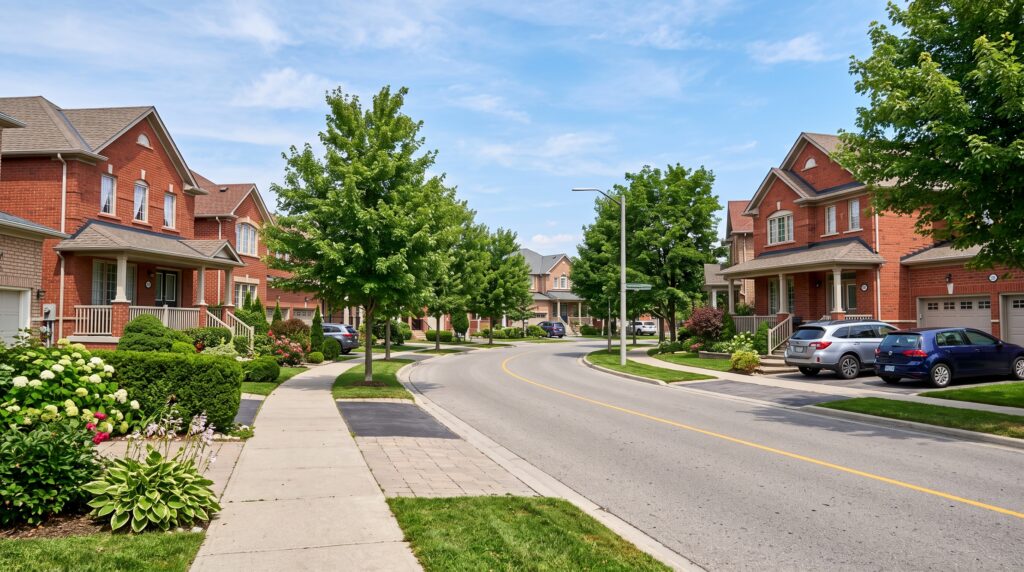
A few recent federal changes specifically favor first-time buyers, and layering them together can add up to real savings:
- Insured mortgage cap raised to $1.5 million (up from $1 million), opening insured financing to more expensive markets
- Eligible first-time homebuyers and buyers of new builds may qualify for insured mortgages with amortization periods of up to 30 years, subject to applicable eligibility requirements
- First-Time Home Buyers’ GST/HST Rebate, which received Royal Assent in March 2026, offering up to $50,000 back on qualifying new-build purchases
- First Home Savings Account (FHSA), allowing up to $40,000 in lifetime tax-advantaged contributions toward a first home
- Home Buyers’ Plan (HBP), letting first-time buyers withdraw up to $60,000 from an RRSP toward a down payment
- Home Buyers’ Tax Credit (HBTC), worth $1,500 for eligible first-time purchasers

These programs can stack, but eligibility rules are specific to each one — a mortgage broker or accountant familiar with current federal programs can confirm what applies to your exact situation.
A Realistic Example: Meet Priya
Priya, a 34-year-old registered nurse in Mississauga, started house hunting after renting for eight years. Her credit score sat at 695 — solid, but not the 760+ that unlocks the very best pricing. She had $2,400 in credit card debt sitting at 40% of her available limit, and a car loan with three years left on it.
Before applying, her broker suggested she pay the credit card down below 30% utilization and hold off on financing a planned kitchen renovation until after closing. Two months later, her score climbed to 721. That shift, combined with choosing an insured mortgage at 10% down rather than stretching to 20%, moved her into a noticeably better rate tier than her first quote. Her monthly payment came in about $140 lower than the original estimate — real money, from decisions made months before she ever signed anything.
Her story isn’t unusual. Small, deliberate moves in the months before applying routinely move borrowers from “approved” to “approved at a genuinely competitive rate.”

A Second Example: Meet Emeka
Emeka moved to Canada from Nigeria two years before he started house hunting in Ottawa. His income was strong — he worked full-time as a software developer — but his Canadian credit file was thin. Two years isn’t a long track record by Canadian lending standards, and thin files often get quietly pushed toward higher rate tiers, even when the underlying income is solid.
Rather than assuming he’d have to settle for whatever his first bank offered, Emeka’s broker pointed him toward a newcomer mortgage program offered by one of the major banks. These programs are built specifically for people in his situation: they often allow alternative proof of creditworthiness, such as international credit references, bank statements, or proof of consistent rent payments, to stand in for the years of Canadian credit history a typical applicant would need.
He also opened one Canadian credit card early after landing and used it lightly but consistently, paying it off in full every month. By the time he applied for his mortgage, he had a modest but clean Canadian credit history, a full-time job letter, and two years of Notices of Assessment. He still didn’t qualify for the very best advertised rate — that’s realistic — but he qualified for a meaningfully better one than he expected, and avoided being routed into alternative or private lending altogether.
The lesson from both Priya and Emeka is the same, even though their starting points were different: lenders reward borrowers who understand the criteria early enough to do something about it. Neither of them changed who they were. They changed what their paperwork showed.
What Happens When You Renew or Refinance
Qualifying for a good rate isn’t a one-time event. Roughly every four to five years, most Canadian mortgage holders face a renewal, and a growing share of homeowners are working through exactly that right now as pandemic-era mortgages come up for renewal through the back half of this decade. The rules at renewal are a little different from the rules at purchase, and it’s worth knowing the difference before your renewal letter shows up in the mail.
- You typically don’t need to pass the stress test to renew with your existing lender, as long as you’re not increasing your loan amount. That’s a meaningful exception, and it’s one reason some homeowners stay with a lender even when a competitor’s advertised rate looks better.
- The federal government’s 2024 mortgage reforms specifically stated that all insured mortgage holders can switch lenders at renewal without being subject to another mortgage stress test.
- Refinancing — pulling equity out of your home — is treated as an uninsurable transaction, which generally means higher pricing than a straight purchase or renewal.
- Your credit score and debt ratios can drift over a mortgage term without you noticing, so it’s worth checking both about six months before your renewal date, the same way you would before a first purchase.
Common Mistake: Assuming your bank’s renewal offer is automatically competitive. Renewal offers are sometimes priced higher than what the same lender would offer a brand-new customer, on the assumption that homeowners won’t bother comparing. A quick call to a broker before signing a renewal letter costs nothing and occasionally saves thousands.
Common Mistakes That Quietly Cost You
- Shopping only your own bank instead of comparing across banks, credit unions, and brokers
- Making a large purchase (car, furniture, appliances) on credit right before applying
- Assuming a 20% down payment is always the cheapest path, without running the insured-mortgage numbers
- Not asking whether you qualify as a first-time buyer for amortization or rebate purposes
- Ignoring the stress-test rate when budgeting your realistic monthly payment
Fixed vs. Variable: Which Should You Choose?
Fixed vs. Variable Mortgage Comparison
| Feature | Fixed Rate | Variable Rate |
|---|---|---|
| Payment stability | Locked for the term | Changes with the prime rate |
| Best when | Rates are expected to rise or you want budgeting certainty | Rates are expected to fall or hold steady |
| Typical current pricing | Often slightly higher than variable for insured borrowers right now | Can be lower for insured, well-qualified borrowers currently |
| Penalty to break early | Usually higher (interest rate differential) | Usually lower (often three months’ interest) |
| Good fit for | Risk-averse buyers, tight budgets | Buyers comfortable with some payment fluctuation |
There’s no universally correct answer here — it depends on your risk tolerance, how long you plan to stay in the home, and where you believe rates are headed. A mortgage broker who shops multiple lenders can model both scenarios against your actual numbers rather than a generic comparison.
Your Pre-Application Action Plan

- 6+ months out: Pull your credit reports, dispute any errors, and start paying down revolving debt.
- 4 months out: Avoid new credit applications, financed purchases, or job changes if you can help it.
- 2-3 months out: Get pre-approved with more than one lender or a broker who shops multiple lenders, and ask for both the fixed and variable numbers.
- 1 month out: Confirm your down payment source is “seasoned” (sitting in your account, documented) since lenders scrutinize recent large deposits.
- At application: Bring two years of NOAs if self-employed, recent pay stubs, and a clear paper trail for your down payment.

- Fireproof and Water-resistant: The multi-Layer rolling fireproof file box is made of 3 layered non-itchy silicone coated…
- Multi-Layer&Large-capacity(16″x13.8″x12.2″): Compared with other file boxes, our fireproof file box adopts a multi-layer…
- Movable&Portable:Compared with other file boxes,our rolling file boxes are equipped with 4 durable 360 degree movable wh…
Tip: If you’re a newcomer to Canada with limited local credit history, ask lenders specifically about newcomer mortgage programs — several major banks and some brokerages have products designed for exactly this situation, sometimes accepting alternative proof of creditworthiness from your home country.
What You Can Do: Working With a Broker vs. Your Bank

Going directly to your own bank is comfortable, but it means you’re only seeing one lender’s pricing. A mortgage broker works across dozens of lenders and, in many cases, can access rates that aren’t publicly advertised at all. Comparison platforms like Ratehub, nesto, and similar services let you see a real-time snapshot of where rates sit across the market before you commit to a conversation with any single lender — worth doing even if you ultimately choose to mortgage with your own bank. (These are general market tools, not something Elionyx is compensated for recommending — always compare a few before deciding.)
There are a few practical trade-offs worth understanding before you pick a path:
- Your bank knows your existing relationship, may offer loyalty perks (fee waivers, bundled products), and can sometimes move faster if your finances are straightforward. The trade-off is that you’re only seeing one lender’s appetite for your file.
- A broker shops your application across multiple lenders at once, which matters most if your situation is even slightly non-standard — self-employed income, a newcomer credit file, or a higher debt ratio. Brokers are typically paid by the lender you choose, not by you, though it’s worth confirming that directly.
- Online-only lenders (digital-first mortgage companies) sometimes advertise the lowest headline rates in the country, in exchange for a more self-serve application process with less in-person hand-holding.
None of these is objectively “best” — the right choice depends on how straightforward your file is and how much you value a personal relationship with your lender versus the widest possible rate comparison. Many buyers get a quote from their own bank and a broker in parallel, then compare the two before committing to either.
Frequently Asked Questions
What credit score do I need for the best mortgage rate in Canada? Most lenders reserve their top advertised rates for scores of 680 or higher, with some offering additional discounts above 760.
Is it better to put down 20% or less on a mortgage? Not automatically. Insured mortgages (under 20% down) sometimes carry lower interest rates than insurable or uninsurable mortgages, because the lender’s risk is covered by mortgage insurance. Run the numbers both ways with a broker before assuming 20% is cheaper.
What is the mortgage stress test? It’s a federal requirement that you qualify at the higher of your contract rate plus 2%, or 5.25% — regardless of the actual rate you’ll pay.
Can first-time buyers get a 30-year mortgage in Canada? Yes. Since December 2024, eligible first-time buyers can access 30-year amortizations on insured mortgages, and buyers of newly constructed homes may also qualify regardless of first-time buyer status.
What’s the difference between GDS and TDS ratios? GDS covers only housing-related costs against your income (target: 39% or below); TDS adds all other debt payments (target: 44% or below).
Does a longer amortization always cost more overall? Yes, in total interest paid, even though your monthly payment is lower. It’s a trade-off between monthly cash flow and lifetime cost, not free money.
How often does the Bank of Canada change interest rates? There are typically eight scheduled rate announcements per year, roughly every six weeks.
What’s the maximum home price for an insured mortgage in 2026? $1.5 million, up from the previous $1 million cap.
Do newcomers to Canada qualify for regular mortgage rates? Many lenders offer newcomer-specific mortgage programs that account for limited Canadian credit history — worth asking about directly, since terms vary significantly by lender.
Should I lock in a rate before I find a home? A pre-approval typically holds a rate for 90-120 days depending on the lender, giving you a buffer while you shop — but always confirm the exact hold period in writing.
Will paying off my car loan early help my mortgage application? It can, by lowering your TDS ratio, but check for prepayment penalties first and weigh the cost against the benefit.
Is a mortgage broker free to use? In most cases, yes — brokers are typically compensated by the lender you choose, not by you directly. Always ask upfront how a broker is paid.
Quick Summary: The Path to a Lower Rate
- Credit score 680+ (ideally 760+) opens the door to the best pricing
- Keep GDS at or below 39% and TDS at or below 44%
- A smaller down payment (insured mortgage) can sometimes beat a 20%+ down payment on rate
- Understand the stress test before you set your budget, not after
- Compare fixed and variable, and shop more than one lender or a broker
- Take advantage of first-time buyer programs if they apply to you
Final Thoughts
Qualifying for the lowest mortgage rate in Canada isn’t about luck or timing the market perfectly — it’s about making yourself the borrower every lender wants on their books, months before you ever fill out an application. Clean up your credit, understand your real debt ratios, get familiar with the stress test, and shop around instead of settling for the first number your bank gives you.
The mortgage you sign will likely be the largest financial commitment of your life. A few months of preparation, and a genuine comparison across lenders, is a small price to pay for a rate that could save you tens of thousands of dollars over the life of the loan.
This article is for general educational purposes only and does not constitute financial, legal, or mortgage advice. Mortgage rates, insurance premiums, and qualification rules change frequently and vary by lender, province, and individual circumstances. Always consult a licensed mortgage broker, financial advisor, or your lender directly before making a mortgage decision.
Note: Rate figures cited above were current as of July 2026 and change frequently. Always verify live rates directly with lenders or a broker before making decisions.
Mortgage rates, government programs, qualification rules, and insurance premiums can change. So, readers should verify current requirements with the Government of Canada, CRA, CMHC, their lender, or a licensed mortgage professional before making financial decisions.
Primary sources for rules and regulations
- Government of Canada
- Department of Finance Canada
- CRA
- CMHC
- Bank of Canada
- OSFI, where relevant